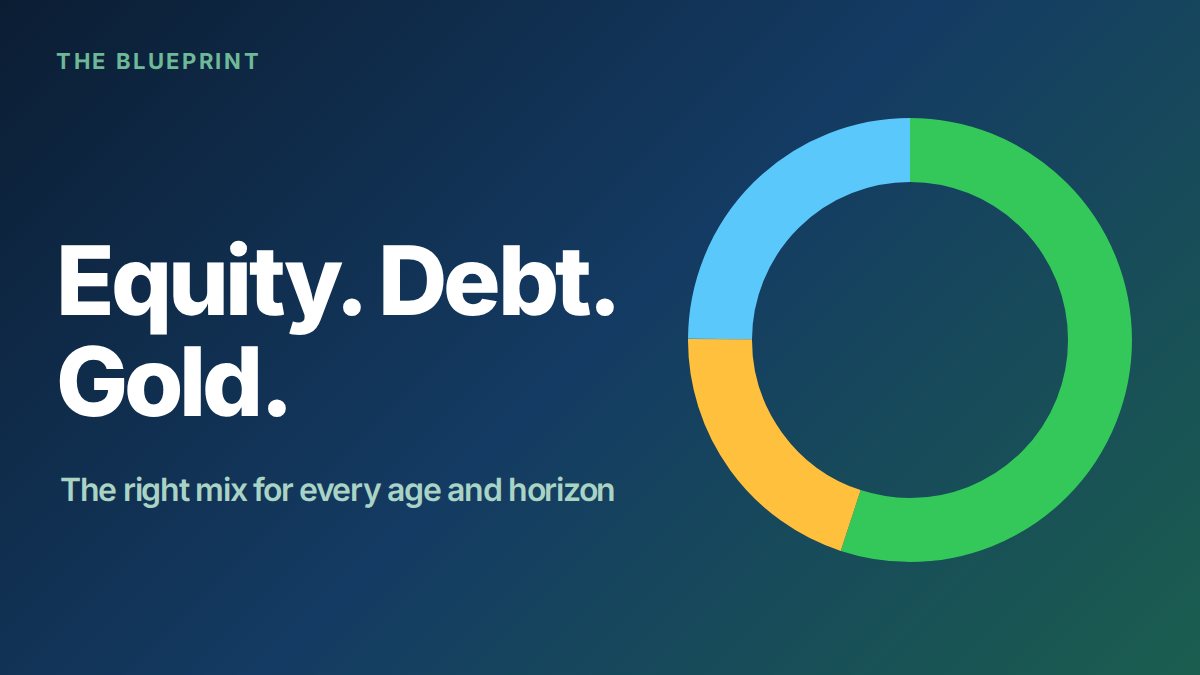
Asset allocation — the split between equity, debt and everything else — explains far more of your long-term outcome than which fund you pick. The classic shortcut is "100 minus your age in equity". It is a decent starting point and an incomplete answer.
Why horizon beats age
A 30-year-old saving for a house down payment in 3 years should hold mostly debt for that goal. A 55-year-old investing for expenses they'll incur at 75 has a 20-year horizon and can hold plenty of equity. Allocate per goal, by years remaining — not one blanket number for your whole life.
| Years to goal | Suggested mix |
|---|---|
| 15+ years | ~90% equity (large + mid + flexi cap) · 10% debt |
| 8–15 years | ~75% equity · 25% debt/hybrid |
| 3–8 years | ~35–50% equity · balanced advantage · short-duration debt |
| Under 3 years | Liquid and short-duration debt; ~10% equity at most |
Adjust for temperament, not just math
The right allocation is the most aggressive one you can hold through a 30% drawdown without selling. If a paper loss of ₹3 lakh on a ₹10 lakh portfolio would make you exit, a 90% equity allocation is wrong for you regardless of your horizon. Our 60-second risk quiz maps your temperament to one of four profiles with a suggested mix.
The glide path
Allocation isn't set-and-forget. As a goal approaches, de-risk on a schedule: from 5 years out, shift ~15–20% from equity to debt each year, so a market crash in the final year can't destroy the goal. Rebalance annually (or when the mix drifts 10%+ from target) — it forces the discipline of selling high and buying low.
Where does gold fit?
5–10% in gold (SGBs where available, else gold ETFs) adds a useful hedge that often rises when equity falls. Treat it as a stabiliser, not a growth engine — its long-run real return is modest.
Start by checking what your current goal needs: the Goal Planner suggests a mix for your exact time horizon.